Colaboration with Martin Saar
Publications
How do we view Michel Foucault today? How might we assess the impact of his widely read and much-criticised work in our time? On the one hand, it ranks among the canonical sources of modern humanities, cultural studies and social sciences, which Foucault has shaped more profoundly than perhaps any other post-war author. On the other hand, in recurring debates he is held responsible for the irrational aberrations and relativist dead ends of contemporary thought.
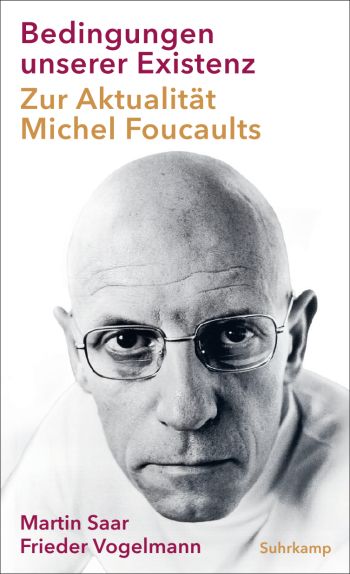
This chapter explores the proximity and distance between Michel Foucault’s thought and the work of Frankfurt School critical theory in a particular historical moment, namely the 1960s and early 1970s.
In this article, Martin Saar and I explore what a contemporary philosophical practice after and following Foucault might look like.
In our contribution, Martin Saar and I discuss how Michel Foucault’s philosophical thought stands vis-à-vis ontology.
![Foucault and Ontology [in German]](/public/publication/2023_09_saar_vogelmann/featured_cover_leben_regieren.jpg)
A review of various books on Michel Foucault